In early October, in a truly unexpected venue-not a concert hall or event space, but an equestrian arena at Clubul Sportiv Ecvestru 163 Plopi in Prejmer-the concert marking the end of the Imagine Universe tour, organised by Oamenii Inspiră, took place.
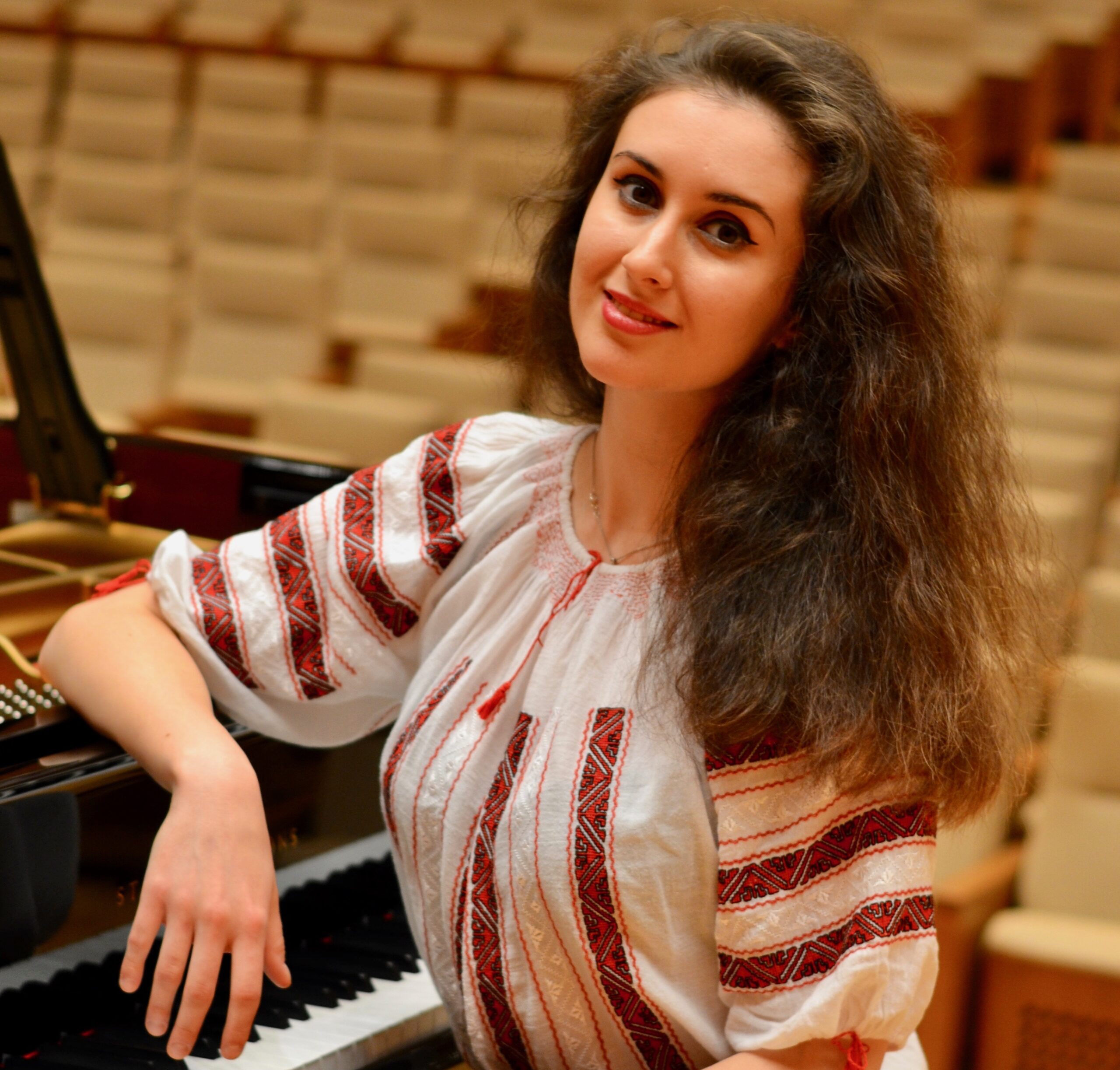
I had the pleasure of discovering pianist Sînziana Mircea on this occasion, alongside her fellow musicians Marco Scazzetta (percussion), Pietro Dossena (electronic music and synthesiser), and Mariia Velia (flute).
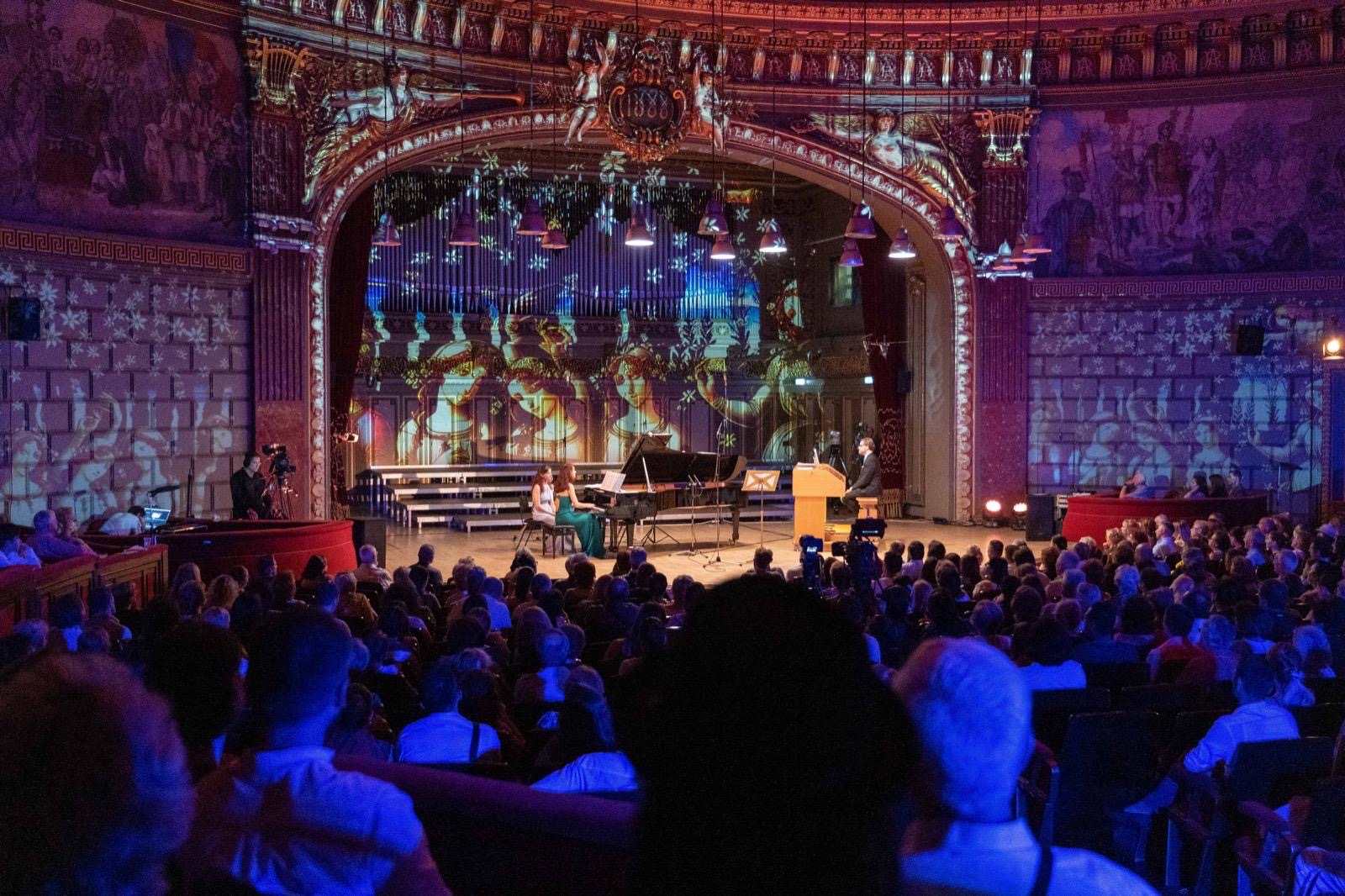
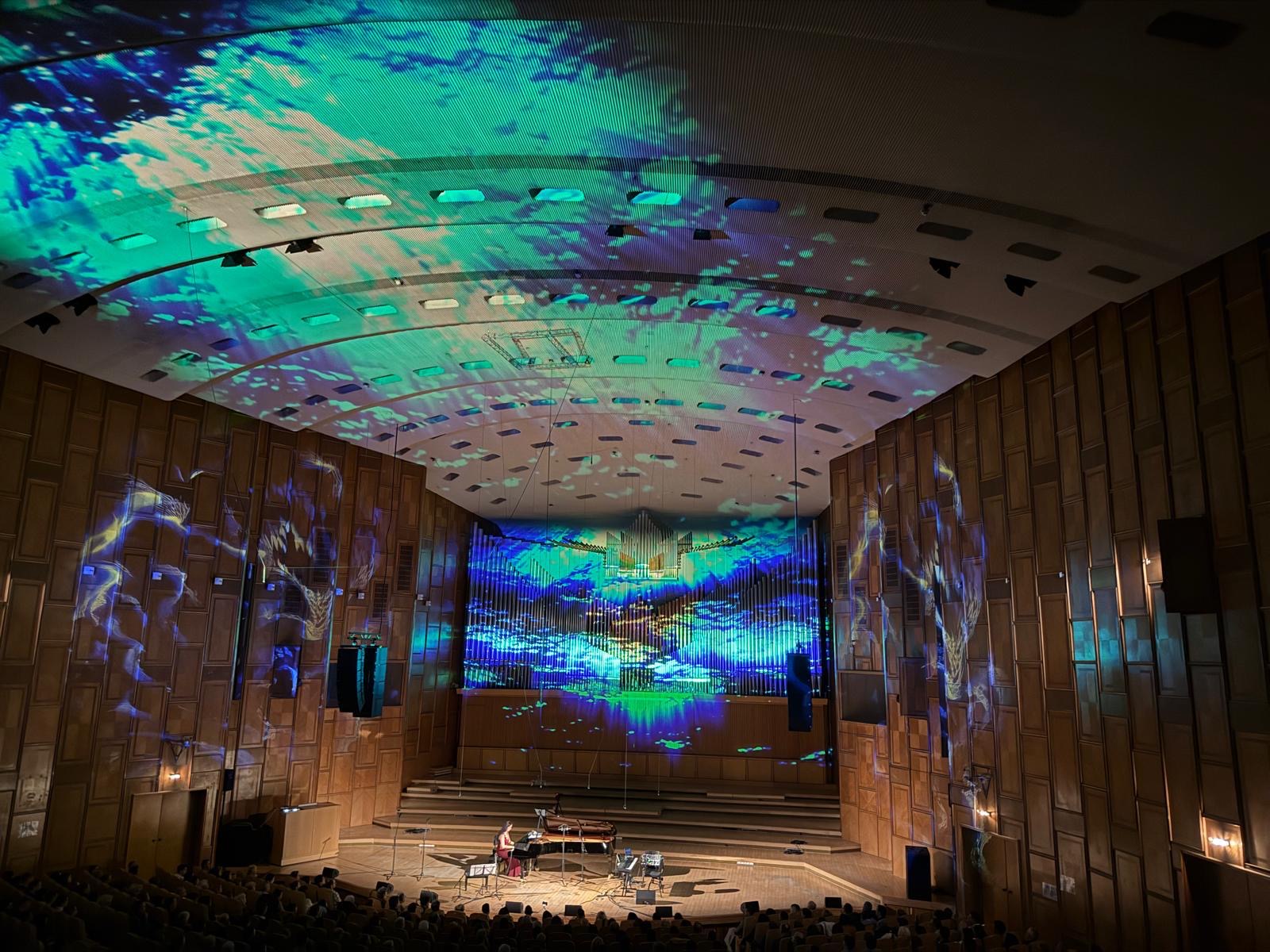
The concert, in which exceptional pianistic technique blended so enchantingly with innovation, was a remarkable experience. The unconventional setting, the horses galloping around the performers, the images unfolding on the screen in rhythm with the music, familiar classical works and the pianist’s original compositions came together in a performance that engaged several senses at once.
The scent of the horses, the breeze stirred by their galloping, the music and the images created an intense multisensory experience. It stirred powerful emotions and will undoubtedly remain in our memories for a long time.
Sînziana Mircea is truly an inspiring person: an artist who dares to step beyond convention and show us that music can be experienced in ways that go far beyond the traditional.
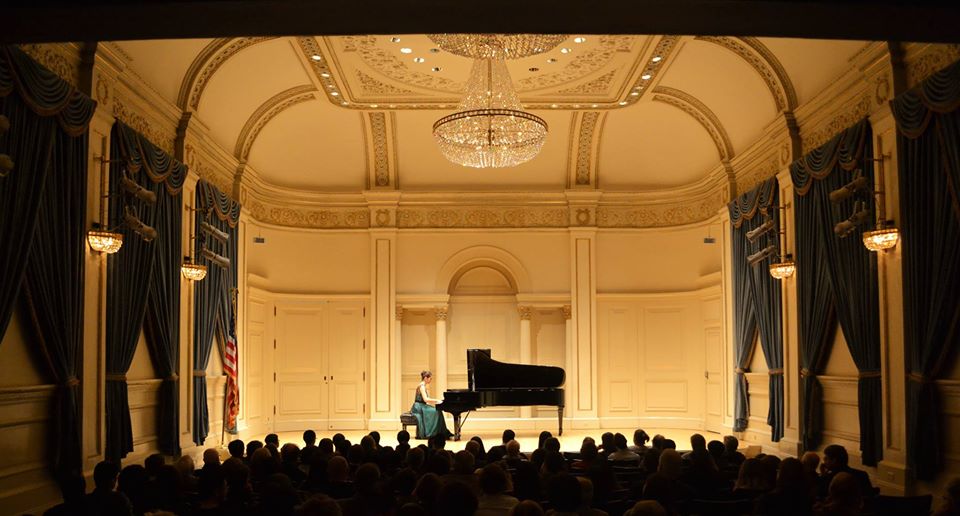
With an impressive international career, Sînziana Mircea is a pianist and composer, and a remarkable presence on the Romanian and international music scenes. She made her debut at the Romanian Athenaeum at just seven years old and has since performed on prestigious stages around the world, from Carnegie Hall in New York and the Kennedy Center in Washington, D.C., to Tokyo Metropolitan Theatre.
She is the recipient of more than 35 international awards and was the first Romanian pianist to win the Van Cliburn Foundation & TCU Scholarship Award. She also holds the distinction of Young Steinway Artist.
Educated at prestigious institutions including Hochschule für Musik und Tanz Köln and the Guildhall School of Music & Drama in London, and having also studied management at Bocconi University in Milan, Sînziana combines an international concert career with teaching and research.
Beyond her pianistic achievements, what sets her apart is her willingness to explore, experiment and reinvent the experience of classical music. In 2019, she launched IMAGINE, an interdisciplinary artistic project in which music, technology, visual projections and original compositions come together to create immersive experiences.
Meeting Sînziana during the Imagine Universe tour made me curious to learn more about the person behind the pianist: her journey, choices, sources of inspiration, challenges and the courage it takes to build her own artistic universe.
We invite you to discover her in this BlissStories interview. Because sometimes, the people who inspire us offer more than a performance to remember: they give us a new perspective on the world.
Sînziana, when you were 15, while most teenagers were enjoying lazy weekend mornings, you would get up at 4 a.m. every Saturday to travel from Bucharest to Brașov, where you studied piano with your teacher, Stela Drăgulin. And you did this year after year.
What made you get out of bed, week after week? What motivated you back then, and how did you manage to keep your passion for music alive despite the exhaustion and sacrifices?
That’s true: it all began with a game and a toy piano. I don’t know when both the toy and I grew up; what I do know is that the game has since become my everyday life, and the piano the place where I always feel at home. When you are a child and want something very, very much, you believe in your dreams with your whole being. As the saying goes: “Do your best and God will do the rest.” And that is exactly what I did!
Looking back, those years were an extraordinary adventure: new people, new places, and many journeys with my parents or friends, setting off before sunrise and often returning long after midnight. My childhood home-a small apartment in Bucharest’s Rahova neighbourhood-was organised entirely around the piano. Even the neighbours had to organise their lives around it: whenever I practised, the piano could be heard along the street and up to the fifth floor, although we lived on the ground floor. I practised up to eight hours a day, so it wasn’t easy for them either! :)) At the same time, it was excellent preparation for what was to come. A concert pianist’s life often looks much the same: waking at four in the morning, heading to the airport and performing in another city that same evening. Those childhood journeys prepared me for the rhythm of the life I would later choose.
Whenever I discover someone with such remarkable artistic gifts, I find myself wondering to what extent the person they become is shaped by education and a supportive environment-and to what extent by a talent that almost insistently demands to be expressed.
What was your childhood like? How did your family and the environment in which you grew up influence you? Who was a role model or mentor for you, and how much of your journey do you think was a matter of choice and how much was destiny?
I have always been fascinated by a story my parents told me. Soon after they moved near Carol Park in Bucharest, one spring evening my father invited my mother for a walk to get to know the neighbourhood. As they passed Dinu Lipatti Music High School, he told her: “This is where our child will study.” It was the closest school to their home. What they didn’t know was that I was already there, listening in, because my mother was pregnant with me. Perhaps that spring evening, before I was even born, was my first encounter with destiny. Maybe if my parents had moved somewhere else, I would never have studied music or become a pianist. So, was it fate? Definitely yes. It happened exactly as my father had predicted.
I was fascinated by the sound of the piano from the age of one. My parents listened to a great deal of classical music at home, and we often went to concerts. At one of them, when I was only three, I told my mother I wanted to become a pianist for a rather practical reason: so I could receive lots of flowers. When you are three and imagine yourself as a princess, the road to music leads past the florist and shop windows full of glittering dresses. From that concert at Sala Radio to my first lessons at the music kindergarten was a short journey-a five-minute walk from home. My grandmother Ana, who lived with us, took me there.
It was very difficult for her because she suffered from severe asthma and struggled to breathe with every step. The school had no waiting room for accompanying adults, so they had to stand outside for an hour-in winter or summer, in rain or freezing weather. That is how I began my musical education, at three, alongside my grandmother. When my parents couldn’t take me, she also accompanied me to piano lessons, and we practised together, although she had no connection to music herself.
My grandmother’s suffering and selfless effort left a profound mark on me. When I was about six and won my first cash prize-a symbolic amount, of course-I gave it to her so she could buy her medication. It was my way of repaying the love and sacrifice of my grandmother Ana, who accompanied me on this journey until she passed away. She taught me: “Say ‘I can’, and you will be able to.” Although I do not come from a family of musicians, my family’s support gave me confidence and made me believe that anything is possible if you work hard. We were a team pursuing the same dream-my dream-and we have remained one to this day.
After two years at the music kindergarten, when I was around five, I received a small piano and began studying the instrument, which has never left my side. I was fortunate to study with an extraordinary teacher, Elena Dumitrescu, from Dinu Lipatti Music High School in Bucharest. She guided my hands on the piano through those first five years and laid the foundations on which I later built. With her, I gave my first concerts, won my first piano competition prizes and achieved my first important results.
Between eighth and twelfth grade, I was fortunate to study with another wonderful teacher, Olga Szel, from George Enescu Music High School. She welcomed me not only into her classroom but also into her home, with the warmth and care of a grandmother. I learned an enormous amount under her guidance. Even today, she comes to my concerts in Bucharest and encourages me with the same generosity and confidence she showed me at my very first lesson. During high school, I also studied with Professor Stela Drăgulin from the University of Music in Brașov, who guided me towards the great piano repertoire and introduced me to Rachmaninoff and Busoni.
Now that I am a teacher myself, I believe it is essential to meet a dedicated mentor who can turn your encounter with music into an exciting experience. If young children are pressured to play without enjoyment, the whole experience can become a trauma that brings nothing good.
From the outside, your journey seems to have followed a very clear direction, centred on music from an early age.
Were there moments when you questioned the path you had chosen, or did you always know that you wanted to become a pianist and that there was no other path for you?
When you begin a professional journey so early in life, doubts are part of growing up. A child who becomes a musician chooses a profession at five or six, in a competitive environment, and takes on professional responsibilities much earlier than other children. We see musicians who, at nine or ten, perform in major concert halls just like adult professionals.
For a child studying music, the first important competition does not come at fourteen, with high-school admission, or at eighteen, with the baccalaureate. It comes at five or six, when preparation begins for the competitive entrance exam to a music school. The first semester exams follow in first grade, and they matter: pass them and you stay at the music school; fail them and you are asked to leave and transferred to a regular school. Then come concerts and competitions, when you have to be ready at that moment-not the next day or a week later. The option of saying, “Mum, I’ve changed my mind; I don’t want to play anymore” simply doesn’t exist.
Like an athlete, you have to be in the best possible shape. This responsibility brings enormous pressure, accompanied by doubt and inevitable questions: Why did I choose this? When my path could have been easier, why am I doing music? Is it worth the effort? Am I good enough to succeed?
I lived with these doubts for many years: during middle school, high school and almost until the end of my master’s studies in London. It is a beautiful profession, but also a very difficult one. We strive for perfection, even though we know it does not exist. After every wrong note in an exam or concert, after every competition or audition that does not end as hoped, you ask yourself whether you made the right choice, whether the price-in the loneliness of endless workdays and the anxiety surrounding something as fleeting as the perfection of a sound that lasts only a moment-was too high.
But if, even when you have your greatest doubts, your answer remains bright and you still tell yourself that the effort is worth it, then you know this really is your path. At least, that is how it was for me. It is a one-way road, and you can only keep moving forward. The piano was never my only option, but it has always been my first choice. I did not follow this path because I had no alternative. I chose to continue, again and again, and I believe that this daily choice helped me preserve my joy and motivation, even when results did not come immediately.
Your academic journey is impressive. After studying at the Conservatory in Cologne, you went on to complete a master’s degree in London, spent two years studying at an elite academy in Imola, Italy, and later earned a master’s degree in Art Management in Milan. You are now preparing to complete a doctorate dedicated to Italian Baroque music. I am fascinated by people who, rather than settling for what they have achieved, keep learning, exploring and seeking new challenges.
What keeps you moving forward? Is this need to learn and improve a form of curiosity, personal ambition or perhaps a high standard you set for yourself? And how do you think your life might look today if, at some point, you had decided that less was enough?
I am competitive by nature, but first and foremost I compete with myself. I have always wanted to prove to myself how far I can go. That takes curiosity, a little courage and a great deal of determination. When you think this way, you measure yourself against yourself, not someone else. The profession of being a musician has probably shaped me in this way: whether I am on stage in front of 1,000 or 2,000 people, or performing in a live broadcast, I measure myself against what I can do there and then. Curiosity has pushed me to discover new worlds, while courage-sometimes the unconscious kind that comes with being young-has helped me go beyond what I thought I was capable of. Above all, I have never been satisfied with half measures.
Every stage of my academic journey was an opportunity to learn. Almost every time, I also chose a new country: Germany for my undergraduate studies, then the United Kingdom and Italy for my two master’s degrees, while maintaining a constant connection with Romania. It was difficult: a new language, culture and way of seeing things, and having to find my place in society. I always had to start from zero and work harder to show what I could do.
But it was fascinating, too. Living in different countries, observing other cultures, becoming part of those places and making friends from all over the world had a huge impact on me, both as a person and as an artist. These experiences taught me to be more flexible, open and brave enough to start a conversation with a new colleague by simply saying: “Hi, I’m Sînziana and I’m from Romania. And you?”
Today, I see it as a great privilege. Those cultures and prestigious universities shaped me professionally and personally, and helped me become a happy person. When you are on your own in a foreign country, you see the world differently. You begin to appreciate every kind gesture or smile, and understand that nothing is owed to us and generosity is not necessarily found around every corner. You live without the safety net of your own country, mother tongue or hometown.
That is when small gestures begin to make you happy. You realise that happiness comes in small doses, from the simple but beautiful things that happen every day. We simply have to notice them and enjoy them. For me, happiness found a voice during my first years of study in Cologne, and ever since, its voice has been heard every day in my music.
A career like yours requires much more than talent: it takes hard work, discipline and the ability to overcome obstacles.
Looking back, what do you think are the qualities that have helped you most? And what about those traits of yours that sometimes get in your way and that you would like to change?
There is an English saying: “Where there’s a will, there’s a way.” I believe that when you deeply want something, you will find a way towards it. It is the same in the arts. When you build your own path, there are many doors to knock on; they do not always open the first time, and some never open at all. I have experienced that too. And then I told myself: so what? Eventually, a door will open for me-the door that is meant for me. If my path leads there, it will open. Perseverance is essential, and perhaps patience too. I am not particularly patient, but I am still working on it. :))
A little courage and a great deal of imagination are essential. Art is the realm of imagination. Without imagination, nothing is possible; without courage, imagination remains a fantasy. Today, more than ever, I believe innovation and creativity are the qualities that will help society move forward. Technology and artificial intelligence are rapidly transforming many fields, including the creative industries. That is precisely why the ability to imagine will remain a deeply human quality, shaping future societies in which individual perspective will become increasingly valuable.
When we watch an artist on stage, we often see the beauty of the result, but very little of what it took to get there.
Do you feel that music has given you more than it has asked of you? Were there things you gave up in order to follow your calling that you might have wished to have in your life?
Over time, I have come to believe that the path to achievement most often begins within. When the body has limitations, the mind can unlock things you would never have imagined. Great performers do what everyone else does, but they do one thing more: they think differently. And that is where the principle “what doesn’t kill you makes you stronger” comes in.
Every achievement requires a sacrifice. You choose what that sacrifice will be. What matters is knowing where and when to stop. When achievement, however great, makes you unhappy, I don’t think the price is worth paying. If you have no one with whom to share the joy of success, it loses much of its shine. I have chosen to pursue my professional goals alongside friends and family. I learned that at home.
I make music with my musician friends, and my partner is by my side in all my projects. When my body tells me, “Get off the plane and take a break,” I listen. I get off the plane and take a break. I close the piano, look at the stars and enjoy everything around me. Then I return to the piano with ten times the joy and carry on.
I deeply believe the greatest achievement is knowing your own limits as well as those of the people around you-the people you love and lean on when things get difficult. If you pay attention to the people you love every day, everything else will fall into place. That is the most beautiful thing, and the greatest achievement of all.
A significant part of your career is devoted to education. You currently teach music at two universities in Italy, but between 2017 and 2021 you also ran your own music school, MuseArt, in Bucharest. You spoke to me with great enthusiasm about that period and the creative methods you used to engage children and inspire a love of music in them. I could hear in your voice your affection for the little ones, your passion for teaching and the joy you found in seeing them make progress.
How does teaching university students compare? What does this role bring to your life, and what made you remain involved in education alongside your own artistic career?
Many years ago, while working with very young children and even children with disabilities, I learned that joy, not fear, must always remain the fundamental element of education. I still hold on to this belief in my university teaching. I try to be the teacher I would have wanted at my students’ age, giving them the courage to express themselves freely and believe in themselves.
I tell them one simple thing: play without fear. Nobody is going to pull you off the stage if you play a wrong note, and you are not performing open-heart surgery during the concert. We go on stage to bring joy, and that is impossible if fear dominates us.
A musician’s training is about more than instrumental technique. The mind plays an essential role, which is why my lessons include focus, mental training and managing stage emotions. In stressful situations, the mind is our first ally, but it can also become our greatest trap. Developing confidence and inner balance is just as important as the hours spent practising at the piano.
Alongside your work as a pianist, you have also begun to explore the world of composition.
When did you start composing music? Where does your inspiration come from, and what does your creative process look like? How does music actually come into being? Is it something you consciously seek, or something that comes to you, sometimes unexpectedly?
I sometimes consider music and the musical ideas that come to me a divine gift. Something I have never known before magically comes into being in my thoughts and becomes music. That is something greater than me, like an invisible thread connecting two worlds: the visible and the invisible.
My little game of composing began when I was around ten or eleven. I would start with themes from the pieces I was studying and continue with improvisations that gradually moved away from the original. I found myself exploring jazz themes, film scores and the music of my favourite bands. It was another kind of play at the piano, one that came to represent a large part of who I am as an artist.
When I compose, I often ask myself: what kind of music would I like to hear at a twenty-first-century classical concert? What kind of contemporary classical concert would I buy a ticket for? The answer comes instantly: something like Hans Zimmer, for example, or Ólafur Arnalds. I would love to hear Vivaldi Re-composed, Bach Re-composed, or something classical that sounds modern.
I know Hans Zimmer writes film music-but what extraordinary film music! Why do we love it? Because it tells a story and carries a message. That is what I want my music to do: tell a story, speak about the greatness of divine Creation and the beauty of the world, about hope, love, or our small victories when life gets in our way.
I am not interested in sublime academic exercises for specialists that remain incomprehensible to the wider public, or sound constructions that appeal only to critics but set off the listener’s panic button-or make them want to change the radio station late at night, unless it happens to be Halloween.
For me, and probably for many people, music is a refuge, a place where we can meet ourselves. It should be like a home: harmonious and full of light, with no demons hiding in the dark. That is how I see music, and that is how I want my music to be.
Your immersive concerts go beyond the boundaries of a traditional piano recital, adding new dimensions to the musical experience and inviting audiences to discover music not only through sound, but through other senses as well.
How did you arrive at this approach, and what inspired you to explore new forms of artistic expression? What do you want audiences to feel and experience beyond the music they hear?
I created the first series of IMAGINE immersive concerts in 2019, bringing together well-known classical works, my own compositions and live video mapping. At the time, this was a pioneering move in classical music, one of very few initiatives of its kind anywhere in the world. Honestly, I wasn’t sure I wouldn’t leave the concert covered in tomato juice, so I wore a red dress that evening. I’m joking about the tomatoes, of course, but it was a bold and risky step for a very young artist in a world that had not changed very much in the previous 200 years: the world of classical music. Today, the immersive concert has become a much more familiar concept, signalling major changes in society as a whole.
I believe today’s audiences expect something very different from audiences a hundred years ago, and perhaps even from audiences ten years ago. Our perception of the world has changed. A hundred years ago, the virtual world did not exist, but the metaphysical dimension was extremely important in people’s lives. Today, younger generations experience the real world through the lens of the virtual one, which brings powerful sensory stimuli.
The difference between these two ways of perceiving the world is enormous. Metaphysical thinking once guided people towards their inner world; today, the virtual world leads us towards excessive outward expression and a constant rush towards something or someone else. Along the way, we lose the key to the door leading to our inner universe.
Through my concerts, I try to open the doors to the inner worlds of those present and create experiences that speak on several levels. Imagine sitting in a dark concert hall, hearing waves and seagulls while birds fly across the walls. You cannot talk to anyone, but you do not want to scroll through your phone either. Then something extraordinary happens: you truly listen to the music-perhaps the Moonlight Sonata or Lux Mundi-and begin to feel a sense of peace that no social network can offer.
You hear the music, see the moon and the smile of the person next to you, and perhaps, for a moment, drift into a dream. You feel safe in the middle of the world, perhaps even happy-in a world where violence and hatred are part of the daily headlines and the disorder of modern life.
That is what I want to offer through concerts that bring image and imagination together with music: a moment of wonder, a moment of happiness in the hearts of those who give me their time by coming to a concert.
Sometimes these ideas lead to unexpected collaborations, such as IMAGINE x Kuriozum in Prejmer, where the magnificent music of Vangelis met wonderful horses, two metres tall, guided by little girls aged nine or ten. It was another message about the power of the mind, which knows no age, and about the girls’ ability to guide such majestic animals, which seemed almost to dance to the music as the audience watched, spellbound.
I strongly believe in creativity and in the courage to keep trying new things. That is why every edition of the IMAGINE series brings a different kind of experience.
You are still very young, yet you have already built an international career, with recitals and tours around the world, ambitious artistic projects and academic work at prestigious universities.
What does success mean to you today? Is it different from what it meant to you at 20? And how do you know you have succeeded, beyond applause, awards or professional recognition?
For me, the greatest success is having turned a childhood dream into my everyday life. Through hard work and with God’s help, I have managed to do exactly what I wanted when I was three and told my parents I wanted to become a pianist. And yes, today I wear glittering dresses at every concert, and sometimes little three-year-old girls in princess dresses give me flowers. I relive that same feeling of wonder and joy again and again.
When I was twenty, I saw success through awards or concerts such as the one at Tokyo Metropolitan Theatre. Today I see it differently: success means waking up and doing exactly what I dreamed of doing as a child. Being able to walk on stage, teach, explore archives or travel through music is what I wished for. It is a blessing I enjoy every day, without taking it for granted.
Whenever I receive an invitation to perform or pack my bags for a new tour, I remind myself how lucky I am. And when the applause fades, what remains is balance in my personal life. There is nothing more beautiful than coming home to the person you love, with a romantic dinner and Nat King Cole playing softly in the background.
We have spoken at length about music, practice, achievement and all the things that have shaped your professional journey. But I am also curious to discover Sînziana beyond the stage.
Who are you when you are not a pianist, composer or teacher? What brings you joy in everyday life? And is there something you really enjoy doing even though you are not particularly good at it?
When I am not wearing my concert dress or going to the university, I am simply Sînziana: a girl who left Bucharest with a suitcase full of dreams and enjoys the little things that make the miracle of life so great-a cup of coffee in bed, pizza with friends, an evening at a pop concert or Christmas morning.
During my university years, the canteen cooks were my best friends, and I rarely went near the stove. Recently, though, I have discovered how much I enjoy cooking. When I am not studying scores, I am studying recipes by Jamie Oliver or my mother. In other words, I cook just like at home! Sometimes it even turns out well, haha… :))
I also enjoy dancing salsa, going out for dinner with friends and, sooner or later, inevitably coming up with new musical “mad ideas” together. And so the day always begins and ends with music.
You have already achieved many of the things a young musician can only dream of. And yet, I like to believe that dreams never really end; they simply change shape as we grow.
What dreams are still waiting to be dreamt? What would you still like to discover, experience or achieve, both as an artist and as a person?
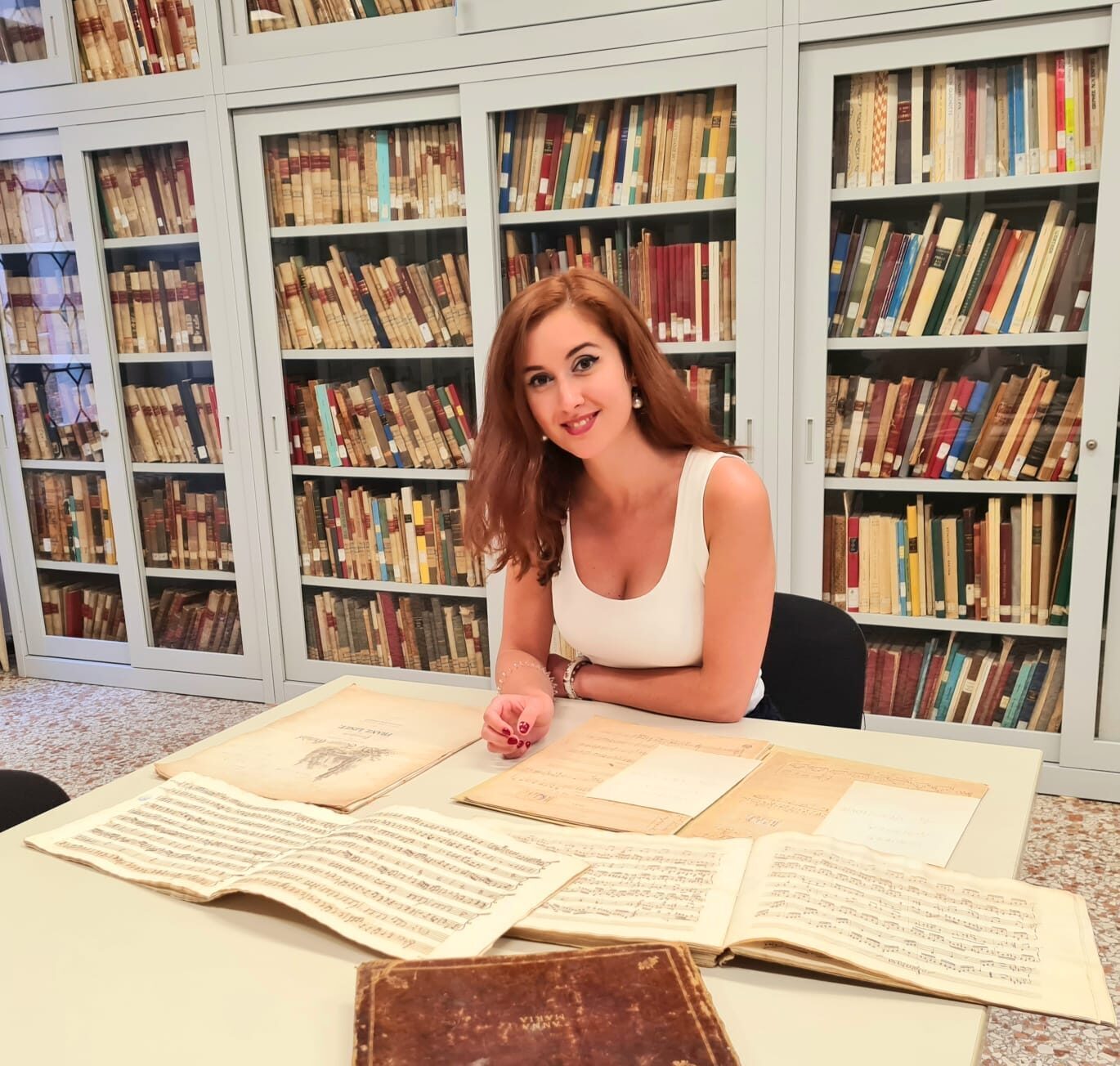
When it comes to dreaming and imagining the future, I am a true champion! Almost every day I discover something that inspires me: a new piece, an old manuscript, a place I have just discovered. Very often I find myself thinking about a new project, a piece I would like to add to my repertoire or a new IMAGINE concept.
I have an entire list of new musical ideas on my phone. I have named it “the music greenhouse”, because the ideas live there like little seeds, waiting for the day when it is their time to come into the light.
As a mother myself, I feel I have learned a great deal from your story-from the discipline, perseverance and passion with which you have built your path.
What advice would you give parents who discover musical talent in their children or hope to guide them towards a career in music? How can we nurture talent and discipline without turning passion into an obligation?
I have a theory based on the fact that almost all young children sing naturally and willingly. They instinctively love music because their mothers raise them with lullabies into which they pour all their love. Children remember the sound of their mother’s love, and that brings them joy. So when they are given the opportunity to play an instrument, they do it with pleasure, because music carries the love of a mother’s lullaby. That was my experience too.
I approached the instrument with enormous enthusiasm and curiosity: let’s see what this big black box can do! But my parents’ support was just as important then as it is now. They are engineers, but they believed wholeheartedly in my choice and supported me tirelessly. A parent’s support for a child’s choice is essential: a parent builds in a child’s heart the belief that they can achieve whatever they set out to do.
When I was in high school, they drove with me to Brașov every weekend for three years-not to go skiing, but for my piano lessons. Thanks to their efforts, I was able to take part in piano competitions abroad from the age of nine. Seeing how much my parents and my grandmother Ana were involved, and how many sacrifices they made for me, I felt I had to repay their efforts somehow. The only way to do that was through results.
If you know how to play an instrument, then when words cannot express everything you feel, you will always have music through which you can say it all. A child who learns to play an instrument can never have that ability to express themselves taken away. And that can be extremely important.
As for parents, I hope they never forget that they are the ones who plant and nurture their children’s self-confidence. All children are born courageous. Fear is something they learn as a protective mechanism, one everyone needs. But a parent must remain the “guardian” of a child’s courage and belief that dreams can come true-because simple joy may fulfil you more than achievement built on a mountain of frustration.
Blisspire was born from a desire to bring more inspiration and joy into people’s lives. I believe that the stories of people who follow their calling with passion can awaken our curiosity, give us courage and make us want more from ourselves. Thank you, Sînziana, for sharing your story so generously and for the example of perseverance, professionalism and passion you offer.
At the end of our conversation, I would like to invite you to leave Blisspire’s readers with a thought-something you deeply believe in and feel is worth passing on. And because I like to believe that wonder is one of the most beautiful ways to stay alive and curious: what still amazes you today?
Thank you, Anda, for inviting me to this interview, and especially for coming to my concert in Prejmer! I think it was the most spectacular concert I have ever performed.
You asked me what still fills me with wonder today. The truth is that I am still amazed, and I feel great excitement before every concert, without exception. I stand backstage and watch the audience enter the hall, look for their seats and settle into that very particular buzz that fills a concert hall before a performance. The anticipation is almost tangible.
When the lights go out and the gong sounds, everyone sets their worries aside for a few moments-perhaps even their phone-and chooses simply to be there. Every time, I am overwhelmed by emotion and think: “Wow, so many people have actually come to the concert tonight! They have chosen to spend part of their time here, with me and my music.” In those moments, I feel deeply grateful to every one of them for that trust, and I want to give them the most beautiful concert I can.
So yes, I am still filled with wonder. And I hope I never stop being so.