The world is changing profoundly, but we don’t always change along with it.
In recent months, I have traveled to different countries and had conversations with people of various nationalities. This is something that fascinates me: to see how they think, how they feel, how they perceive the world and the transformations in their country of origin or in their adopted home. Locals, however, seem to feel change the most acutely. They lack the perspective of an emigrant, yet they closely observe the shifts brought about by newcomers in their own country.
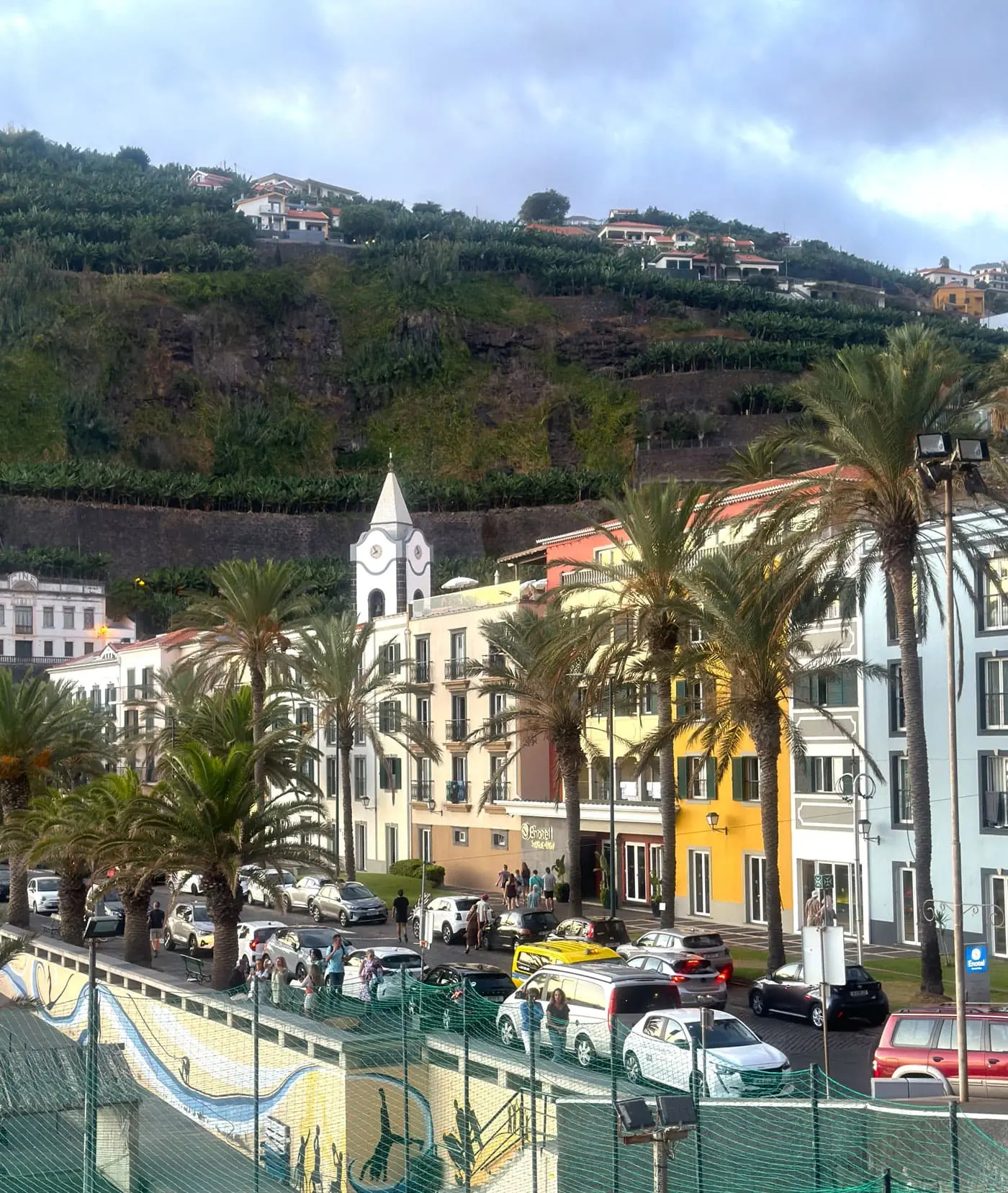
In Madeira, I was struck by the expression of sadness on our guide’s face as he told us about his childhood. They were poor, living from agriculture and raising animals. Life was hard, as it was for our grandparents, but it was simple, everyone was the same, and they were happy.
In just 20 years, with massive investments from the European Union, the island developed rapidly, and along with it, tourism. Today, most residents live off tourism and earn better, yet the cost of living has risen so much that few can even afford rent. In Funchal, a two-bedroom apartment now costs between €1200–2000 per month. At 40, he shares a rental with a friend and works three jobs just to get by.
Meanwhile, English, Americans, Russian oligarchs, and others buy properties and pieces of Madeira, bringing with them ostentatious luxury, an illusion of prosperity that only touches a small fraction of the population. The rest struggle to survive. Services on the island are generally poor, and on the faces and in the attitudes of waiters, Uber drivers, and shopkeepers, one reads a general unhappiness, doubled by a bitter resignation.
In Antalya, the population has grown rapidly in recent years, following wars in the region. Syrians, Russians, Ukrainians, and other immigrants have settled here. Many Turks say the city has become “Russian-speaking.” At the same time, 7.5 million Turkish citizens live abroad, one of the largest diasporas in Europe.
In Puglia, I spoke with a British couple who complained about the very high number of immigrants in the UK and the lack of a real integration plan for those entering the country each year from states such as India or Pakistan. After the pandemic and Brexit, their number has reached over one million per year. As in Germany, many locals choose to move to villages or even emigrate themselves, because they no longer recognize their own country.
Today we are experiencing the highest level of human mobility in history. According to the UN (UN DESA, 2024), there are over 304 million international migrants, representing 3.7% of the global population. The number has nearly doubled since 1990. Nationalities and cultures are mixing at an unprecedented pace, and cities are becoming melting pots where languages, values, and identities hybridize.
At the same time, Europe is facing a decline in birth rates. In 2023 only 3.67 million children were born in the European Union, a historic low. Without migration, Europe would fall into severe demographic decline, experience a structural crisis with labor shortages and collapsing pension and healthcare systems, and inevitably face conflicts between generations and social classes.
In this context, migration is no longer just an option; it becomes a lifeline for Europe.
Migration not only changes the economy, but also traditions, culture, and national identity.
Europe, and the entire world, are undergoing a profound transformation, not only economic and demographic but also cultural and identitarian.
And I think about our generation, those of us aged 35–50. We lived an analog childhood, a digital adolescence, and now we experience maturity in the AI era.
We are living through a demographic record, a civilizational shift, and a technological revolution all at once. We are parents and professionals at the same time, responsible for raising children for an unpredictable future, while also remaining relevant ourselves in a world being rewritten before our eyes.
What do you find harder: to understand change, to accept it, or to adapt to it?